
The Rectory
Adjacent to the Cathedral bell tower is the rectory building, which, with the rest of the works present, elegantly completes the monumental complex of the Abbey. The rectory house is intended for the residence of the priest serving as parish priest of a particular church. The origin of this type of dwelling dates back to the Middle Ages, in particular to the Reformation of the 11th century, when an attempt was made to propose a model of community life, sometimes monastic, to the secular clergy as well. For this reason, communal living in a building designated for this purpose was promoted. In the presbytery of Carrara Cathedral, the canons of the San Frediano priory, who were in charge of the cathedral in times past, resided. The abbey church of Sant’Andrea, formerly dependent on the Diocese of Luni, was ceded in 1151 to the Canons of the Church of San Frediano of Lucca.
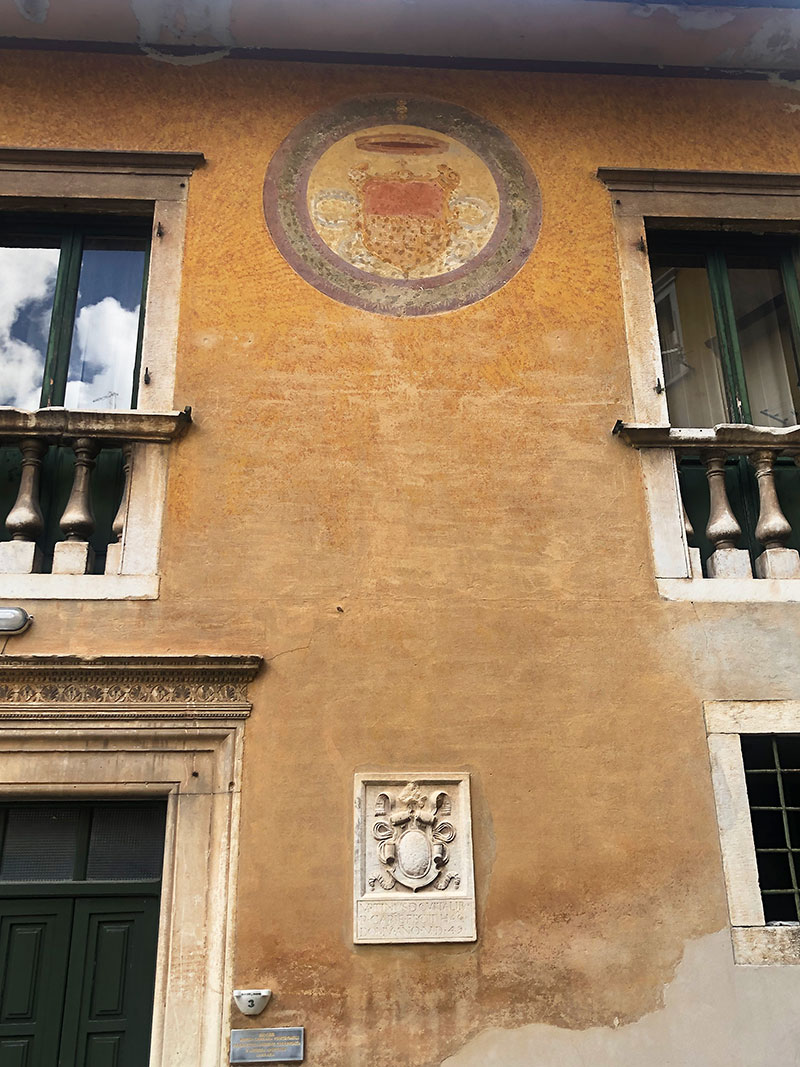
The presbytery today has two floors. It was built in 1549 by Martino dei Civitali, a member of the Canons Regular of San Frediano of Lucca who was Prior of the church of Sant’Andrea Apostolo between 1534 and 1550. Evidence of this can be found on the ground floor, on the façade, where there is an ancient marble plaque.
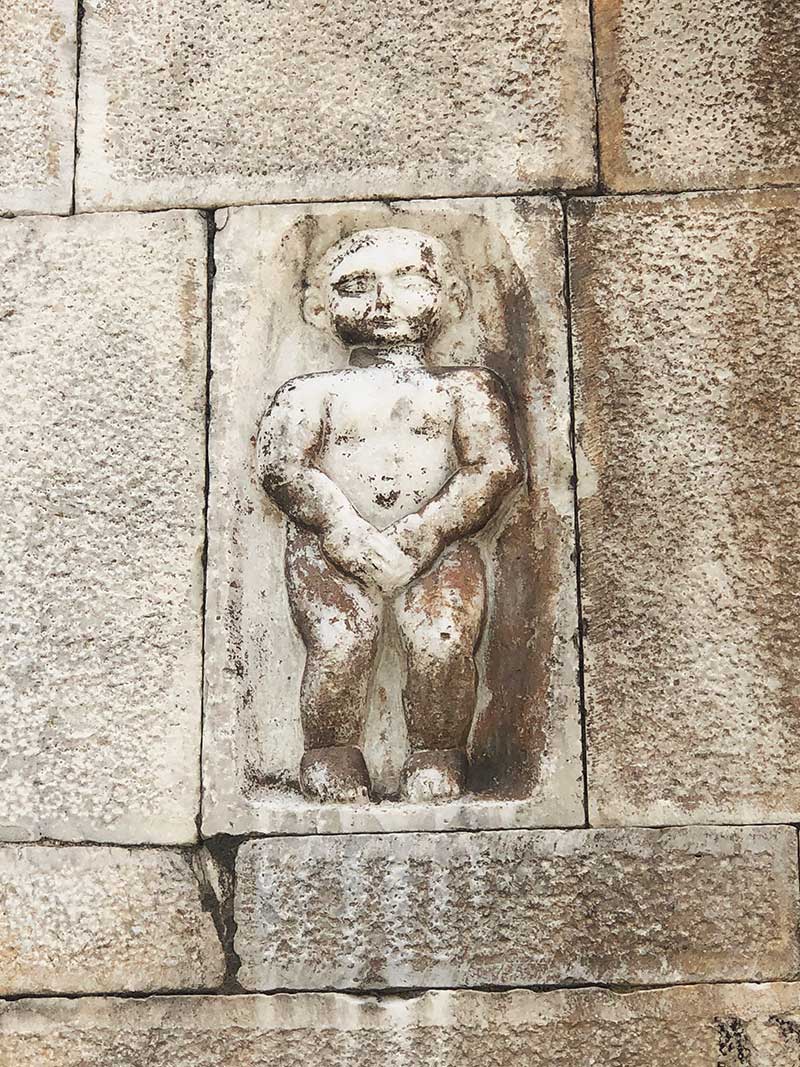
Before 1549, the presbytery was located in the medieval house on the south-west side of the square, opposite the gate of San Giovanni. These are marble buildings that the first Estimate of Carrara indicates as ‘monosolariate’, i.e. with a single floor formed by ogival doors and panels sculpted in bas-relief. Among these is a nude figure of a woman in the act of covering her private parts with her hands. According to scholars, this would be an allegory of modesty and would indicate the place where public trials were held or the punishment of so-called dishonest women. What is certain is that this structure was erected at the end of the 14th century, becoming the canonical house with an adjoining sacristy and being directly connected to the cathedral by a portico that is no longer present. A careful study carried out in the 1960s by arch. Dante Petrucci also revealed numerous details, including the characteristic iron rings at the bottom, between the arches. These would not be points to which the horses could be tied while resting, but places where tramps could be chained.
On 24 February 1946, at the request of the then diocesan bishop Monsignor Carlo Boiardi, the Sacred Consistorial Congregation, by order of H.H. Pope Pius XII, decreed the restoration of the Collegiate Church in the Cathedral of Carrara, elevating the Propositura di Sant’Andrea Apostolo to the rank of Abbazia Mitrata with the first dignity of the chapter reserved for the abbot. The last major external and internal renovation was carried out between 1959 and 1963. It was at that time that traces of hidden paintings came to light during the renovation of the façade. Thanks to the generous contribution of Mr. Dario Caffaz who undertook the entire expenditure and the masterly expertise of Prof. Palmiro Verzoni of Cremona, the four medallions painted in the mirrors of the façade framed between the windows on the first floor were recovered.
These large paintings have a diameter of 190 cm and depict coats of arms of civil and ecclesiastical dignitaries of the time linked to the history of Carrara Cathedral. These paintings of excellent workmanship are in the 16th century style but worked with the surface of the plaster smoothed, a technique used in the previous century. Their circular shape alternating with the rectangular lines of the windows creates an exquisite rhythm of considerable aesthetic value.
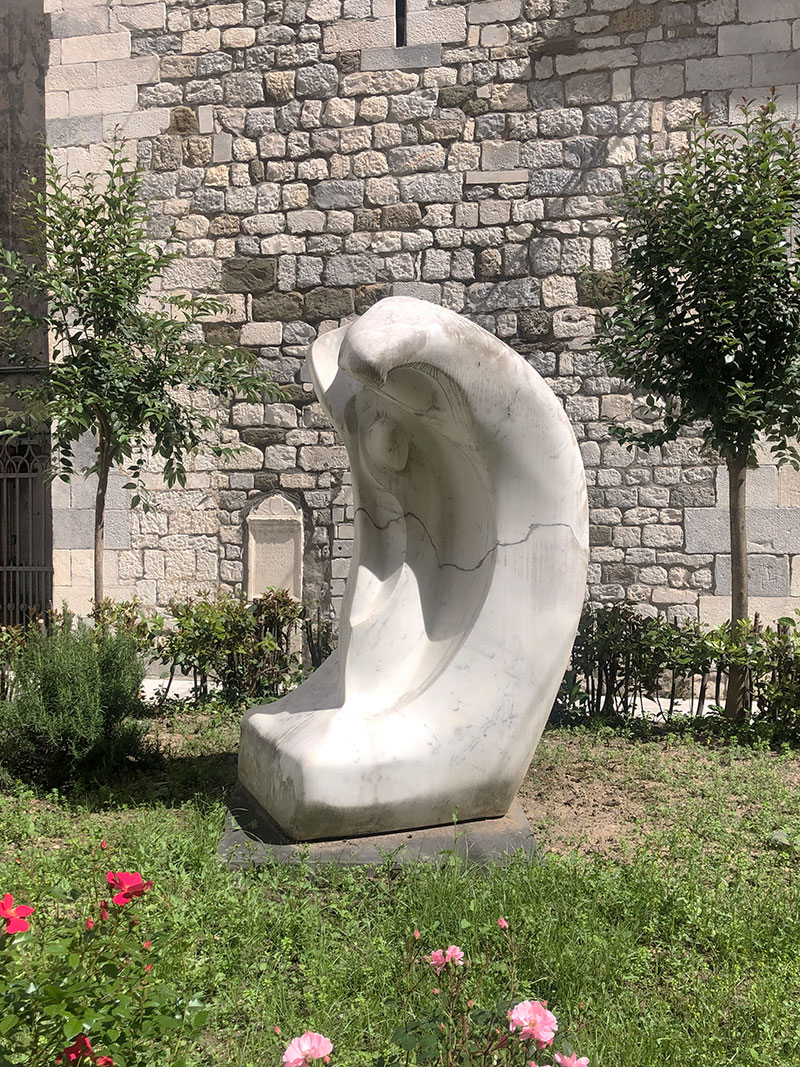
Behind the bell tower, in a pretty flowerbed, we find the large white marble sculpture depicting the Motherhood of Mary, a work by the Thai sculptor Ussanee Kulpherck (Ussannì Culferc) made at the Nicoli studios in Carrara with marble from the Gemignani-Vanelli quarry in 2007 and donated to Carrara Cathedral by the Gastone, Allegretta and Liliana Raggi-Garbati family. The sculptural art of Ussanee Kulpherck expresses a creativity that originates from the study of harmony in form and the constant search to bring out the purest beauty, so that the gaze can enjoy the pleasures of delicate balances of barely sketched or abstract female figures. Indeed, the sculptress investigates the material by treating it to its extreme resistance. The marble bends to her will, the voids explore the stone in depth, piercing it, drawing unusual arabesques within it to give rise to refined interpretations that are resolved in the surrounding space, where poetry materialises in the sensual harmony of the form and the chiaroscuro play of light.