The Sacristy
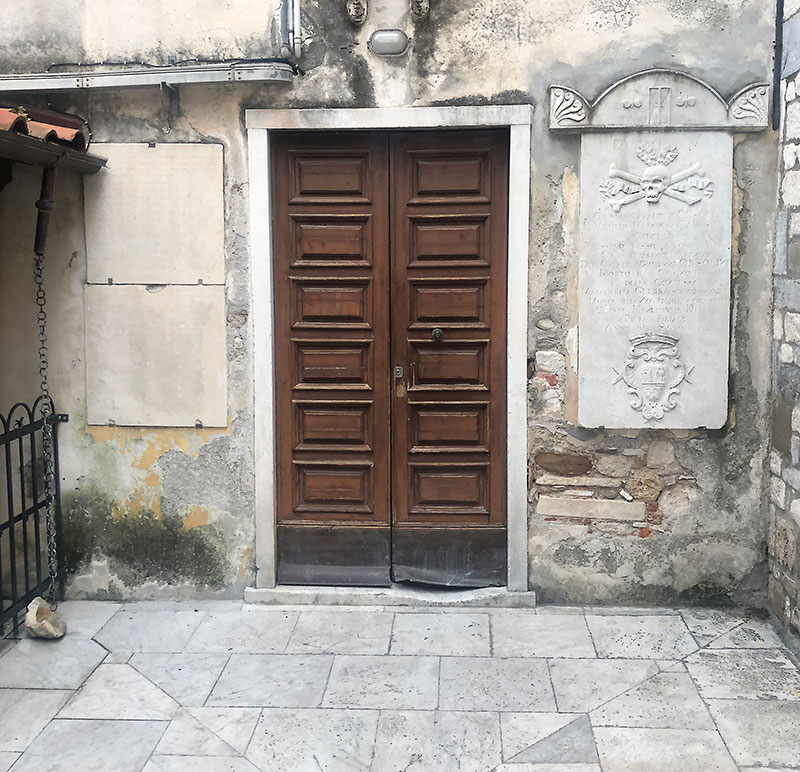
At the base of the bell tower, on the façade of the building that houses the parish rooms and the curates’ residences, we find a series of plaques inserted here after the restoration of the Cathedral after World War II: to the left of the entrance door we find two overlapping plaques dated 1749 commemorating the obligation to celebrate Masses to the Confraternity of the Most Holy Sacrament of the Matrix Church of Sant’Andrea Apostolo of Carrara.
On the right side, on the other hand, there is a plaque decorated with bas-reliefs with an hourglass at the top recalling the concept of the passage of time and therefore of death, surrounded by a pair of bees, symbol of industriousness.
Più in basso la sigla D.O.M. stante per Deo Optimo Maximo («a Dio il più buono, il più grande») sovrasta un teschio con le tibia incrociate al di sotto del quale si può leggere: Carlo Cavaliere Orsolini e Metilde Marchesa Malaspina coniugi eressero presso la tomba a vita, ove riposano le ceneri del Cavalier Giovanni Orsolini, morto il 6 giugno 1826 e della Contessa Margherita Guerra sua consorte, morta il 15 novembre dell’anno suddetto. Questo monumento della Pietà filiale. Anno del Signore 1826.
La lapide è chiusa in basso con una grande rappresentazione dello stemma araldico.
La soglia posta al centro immette nei cosiddetti locali parrocchiali e nelle antiche abitazioni dei curati poste ai piani superiori.
The side door gives access to the sacristy proper. The walls are occupied by large eighteenth-century walnut cabinets characterised by their large spaces and classical lines.
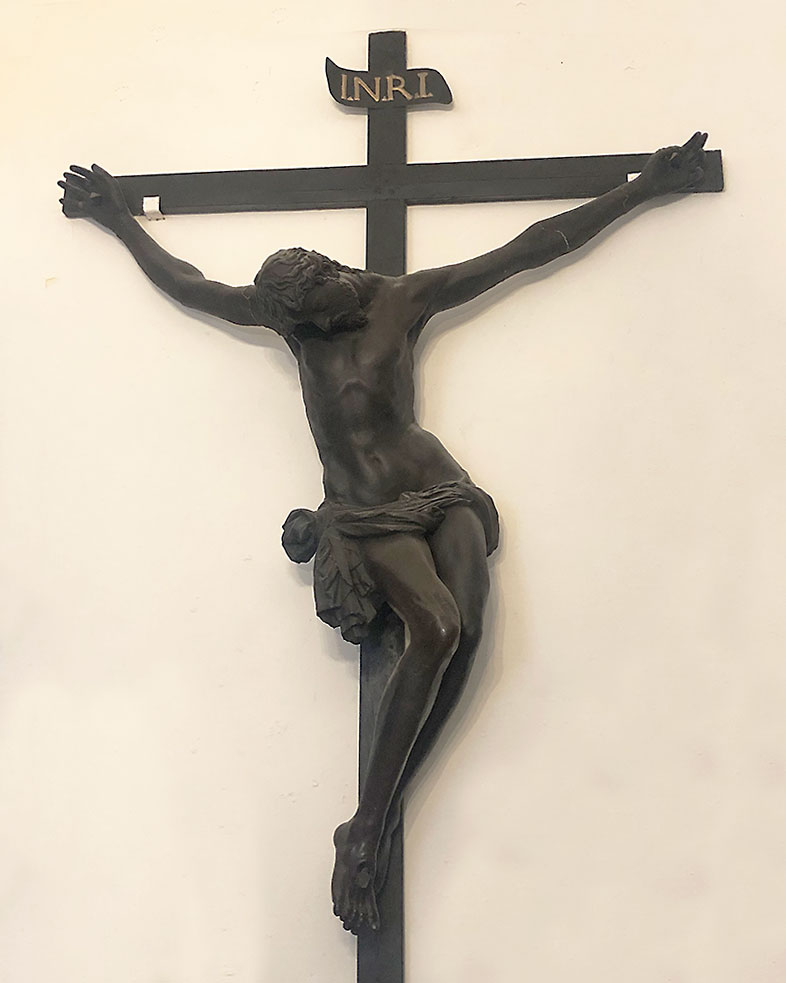
The back wall, framed between the two windows, once housed a small wall altar in polychrome marble, which was removed during work after the Second World War. In its place today is the large life-size papier-mâché crucifix attributed to the great 17th-century sculptor Pietro Tacca. This work, a copy of its twin preserved in the centre of the so-called Altar of the Crucifix, was placed above the high altar, as shown in pictures of the time. As of 22 May 1974, in accordance with the new liturgical regulations imposed following the Second Vatican Ecumenical Council, the presbytery was adapted with the creation of the new mensa coram populo and the ancient crucifix by Tacca was moved to the sacristy, while in its place, thanks to an artistic bronze chain, the “Divine Providence”, a 14th-century work by Lucchese painter Angelo Puccinelli, was placed.
Beneath the right window is a rich Baroque white marble washbasin whose basin is shaped like a large shell.
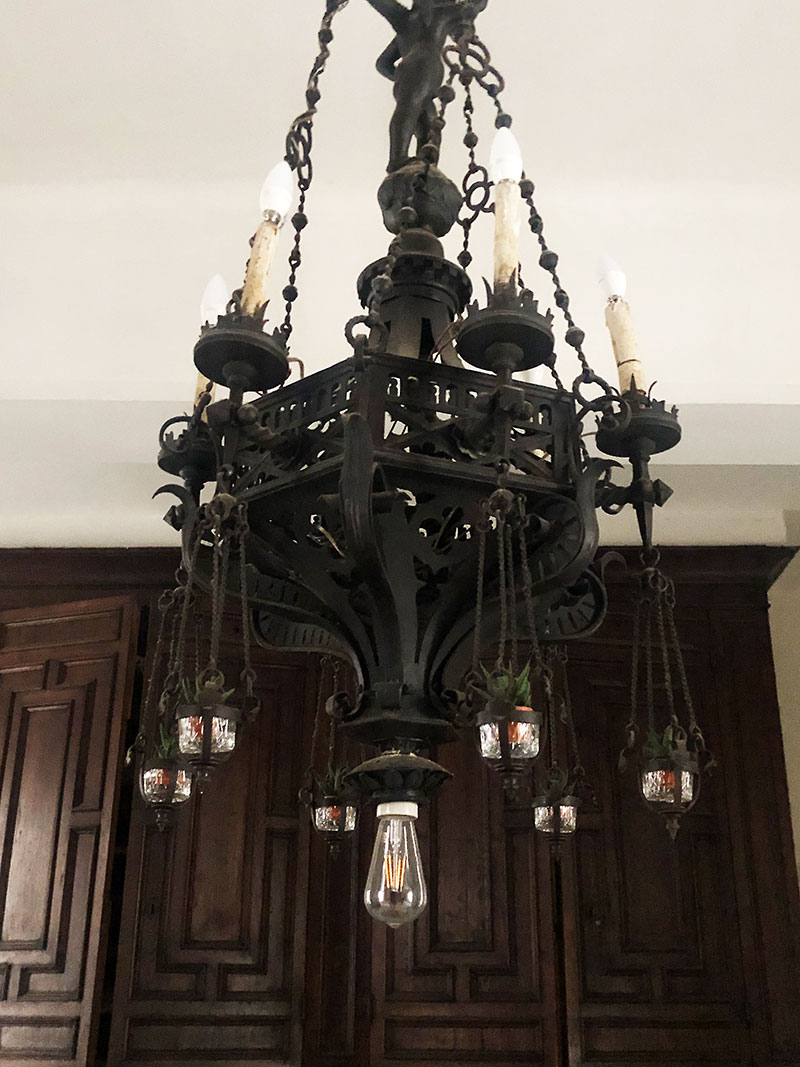
The centre of the large sacristy is dominated by the large six-light bronze chandelier with a cherub standing on the globe in the centre with wings spread in the act of pointing.
At the bottom, the cartouche with the inscription “Carrara, to Mary Most Holy, remembrance of 7 September 1920” illustrates the time, the commissioners and the reason for which it was donated. Originally, as can also be seen from this picture of the time, the chandelier was placed in the cathedral, in front of the altar of the Madonna del Popolo; following the restoration and renovation of the entire abbey complex, it was decided to move it to the sacristy where it can still be admired today.
Also worth mentioning is the beautiful depiction of Mary Immaculate portrayed in a prayerful attitude in the act of crushing the snake. It is a solid wood statue from the early 20th century from Ortisei.